


Why capital credit payments are postponed for 2025
At JCE Co-op, our members aren’t just customers — you’re owners. One of the biggest differences between a cooperative and an investor-owned utility is that when we have money left over at the end of the year, it doesn’t go to shareholders somewhere else. It goes back to you.
What are margins?
Think of margins as the cooperative’s version of “profits.” They are the funds left over after all expenses are paid — including the cost of electricity, broadband, natural gas, operations, maintenance, and administrative expenses.
But because JCE Co-op is a not-for-profit cooperative, those margins aren’t distributed to outside investors. Instead, they are allocated to our members based on how much energy or broadband they used that year. This reflects one of our founding cooperative principles — Members’ Economic Participation — and demonstrates our commitment to financial responsibility, transparency, and community.
What are capital credits?
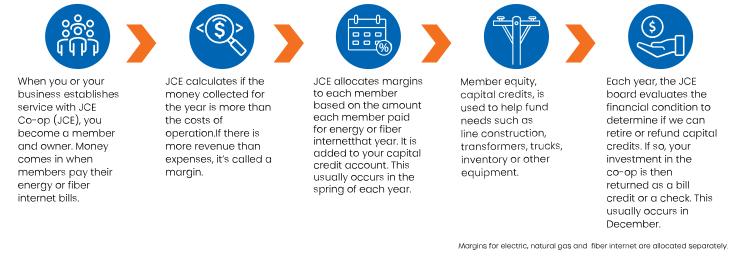
When JCE Co-op earns more than it spends, those margins are divided among members and recorded in your capital credit account.
Think of capital credits as your share of the co-op’s success — the tangible proof of your ownership in JCE Co-op. These credits aren’t paid out immediately; instead, they’re held for you and returned later when the co-op’s financial position allows.
How capital credits work
How do members receive capital credits?
When JCE Co-op is able to return those funds to members, we call it a capital credit retirement. Sometimes members receive this as a bill credit, other times as a check in the mail.
JCE Co-op uses a hybrid retirement method — paying out older credits after 25 years and also returning 5% of all remaining credits at a discounted rate. Each year, your elected Board of Directors carefully reviews the co-op’s financial standing before deciding if a retirement is possible.
Why no retirement in 2025?
This year, your board made the difficult decision to postpone the retirement of capital credits. That decision wasn’t made lightly. Here’s why it’s important for the long-term health of the cooperative:
- Building financial strength: Retaining capital credits increases the co-op’s equity, strengthening our balance sheet.
- Lower borrowing costs: Stronger equity helps us secure better loan rates — saving money for everyone over time.
- Investing in growth: Retaining these funds allows JCE Co-op to invest in infrastructure, technology, and system reliability to better meet members’ needs.
- Long-term stability: This approach supports stable rates and ensures the co-op remains financially strong for decades to come.
What does this mean for you?
While you won’t see a payout this year, the long-term benefits are significant. A financially healthy cooperative means reliable service, stable rates, and a stronger future for all members.
The funds that would have been paid out are still being allocated to your account and remain part of your member ownership record. Allocations are tracked separately for electric, natural gas, and fiber internet. These balances continue to accrue and will be paid out to you when the Board of Directors determines that the cooperative’s financial position allows for a capital credit retirement. Your money is still working for you, helping to keep JCE Co-op strong while preserving your ownership equity for future payout.
Learn more
To understand more about capital credits and how they work, visit Capital Credits or call 1-800-858-5522.